
AI Is Making You Worse at Problem-Solving (Here's the Fix)
You open a tab. You type your problem into an AI chatbot. You get an answer in seconds. It feels productive. It probably isn't.
A study presented at the 2026 CHI Conference on Human Factors in Computing Systems found something that should give every knowledge worker pause: people who jumped straight to AI for help performed worse on critical thinking tasks than those who wrestled with the problem themselves first. Not a little worse. Noticeably worse.
So if you've been reaching for ChatGPT or Claude the moment something gets hard, this article is your friendly wake-up call.
What the Research Actually Found
The study, led by computer scientist Mina Lee at the University of Chicago, split 393 participants into groups. Some got AI help right away. Others had to partially work through the problem before consulting AI. The result? Delaying AI use led to better critical thinking outcomes.
The exception was time pressure. When participants only had 10 minutes, early AI use did provide a genuine boost. That makes sense. But for most of the real decisions you face at work and in life, you probably have more than 10 minutes.
Lee's takeaway: people need strong AI literacy and self-awareness about their own thinking patterns. Because right now, most of us are flying blind.
Why This Happens
Here's what's going on cognitively. When you outsource the first phase of thinking to a machine, you skip the part where your brain forms its own mental model of the problem. That model — however rough — is what lets you evaluate the AI's answer critically. Without it, you tend to just accept whatever the chatbot says.
Think of it like GPS. If you always follow turn-by-turn directions, you never build a spatial map of the city in your head. Then one day the GPS fails and you're completely lost on a street you've driven a hundred times.
AI is doing the same thing to problem-solving. You're getting the answer but losing the skill.
The Skill That's Actually at Risk
Critical thinking isn't one thing. It's a cluster of abilities: identifying the actual problem beneath the surface, evaluating competing explanations, spotting assumptions you're making, and deciding what to do when the information is incomplete.
AI is genuinely good at helping with some of these. It can surface options you haven't thought of. It can draft frameworks. It can synthesize a lot of information quickly. What it can't do is replace the messy, slow, often uncomfortable process of you actually thinking things through.
That process is where your judgment gets built. Skip it enough times, and your judgment gets dull.
What to Do Instead
The 10-Minute Rule
Before you open any AI tool, spend at least 10 minutes on the problem yourself. Write down what you know. Write down what you don't know. Write down your best guess at a solution, even if it's rough. This step isn't about getting the right answer. It's about forming a mental model that makes everything else you do smarter.
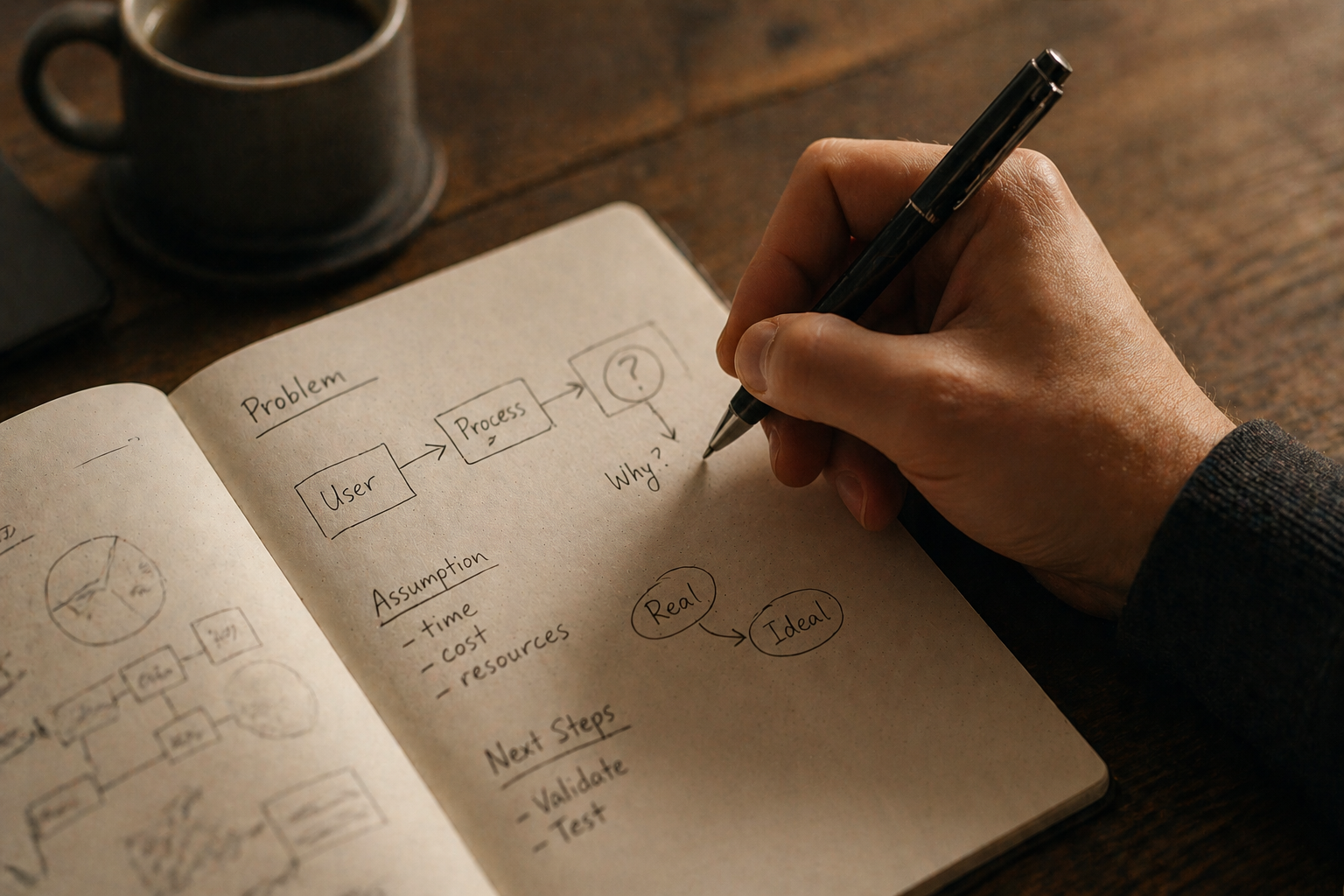
Use AI as a Second Opinion, Not a First Draft
Once you've thought it through, then bring in AI. Use it the way you'd use a smart colleague: 'Here's what I'm thinking — what am I missing? What would you push back on?' That posture puts you in the driver's seat. You're evaluating AI output rather than passively receiving it.
Ask Better Questions
The quality of your AI interactions depends almost entirely on the quality of your prompts. And the quality of your prompts depends on how well you understand the problem yourself. This is a circular argument that all points to the same conclusion: the more you think before you prompt, the better your results.
The Bigger Picture
There's a lot of anxiety right now about AI taking jobs. But the research suggests the more immediate threat is subtler: AI quietly eroding the cognitive skills that make you good at your job in the first place.
The people who will thrive aren't the ones who use AI most. They're the ones who use it wisely — as a tool that amplifies their thinking rather than replacing it.
That's actually reassuring, if you think about it. Because wisdom about when and how to use a tool? That's entirely within your control.
Final Thoughts
The research is clear enough: using AI as your first move on a hard problem is costing you more than you realize. The fix isn't to stop using AI. It's to slow down before you do.
Think first. Then prompt. You'll get better answers, make better decisions, and — maybe most importantly — keep the problem-solving muscle strong.
If you found this useful, I share pieces like this every week — covering the intersection of thinking skills, AI and real-world decision-making. Come join the conversation by subscribing below.
Related reading